It’s that time of year again. Time for school leaders to begin planning their beginning of year professional development. But it’s also one of the busiest times of a school year and the thought of being able to cover everything you need to cover before school starts is a source of real anxiety.
There’s the beginning of year safety information, the annual cybersecurity training, the all staff training for the new literacy curriculum, the training for the new technology platform, the training for how AI can be a tool in the classroom, the review of the cell phone policy, an analysis of last year’s attendance data, and so many others. Oh, and did I mention, there’s also all the trainings that the district has asked to be covered. Before you know it, those twelve precious hours of PD are filled up and half the things that need to be discussed are pushed to the side with a well-intentioned, “we’ll do those during the next PD day.”
But what if there was a way to combine the things that needed to be discussed in a way that would allow school leaders to be able to cover multiple topics at once? A sort of “double-dipping,” if you will. What about teaching staff about the new literacy curriculum while analyzing last year’s attendance data? What about learning the new technology platform while reflecting on the cell phone policy?
Good professional development should model good teaching practices. When teaching a student how to reflect, great teachers provide meaningful experiences for students to reflect upon. They don’t reflect on meaningless, made-up scenarios. Staff professional development should be no different. Instead of having teachers read a meaningless article in order to learn the new literacy curriculum, have teachers utilize teaching strategies from the new literacy curriculum while they analyze student attendance and the correlation of student grades. Actually, this would accomplish a third outcome. Empathy driven professional development that utilizes effective teaching practices gives good ideas to teachers–especially the new teachers–on strategies they can use in their own classrooms. So, more like “triple-dipping.”
Take, for instance, Cañon City High School tackling two school-wide endeavors through one professional development meeting. During the 2025-26 school year, CCHS staff and leadership set out to solve the problem of “inconsistency in practice”–a problem which all schools experience. A problem which means that not all students are provided with equal opportunities in every single classroom. Whether those opportunities are about engaging in real-world experiential learning, or being given the time to learn to reflect and grow from that reflection. The cold, hard fact is that not all students are offered the same opportunities or experiences, and this often stems from inconsistency in practice among staff.
CCHS was also attempting to solve another problem. CCHS had adopted a technology platform, Unrulr, a couple of years ago to help them solve the problem of lack of authentic documentation for their students’ capstone projects. Though Unrulr helped to solve the problem of lack of documentation and students were producing amazing portfolios of capstone projects, there were still staff members who felt uncomfortable using the tool and helping their students use it too. Unfortunately, some of this comes back to those twelve hours of precious PD time at the beginning of the school year and not being able to dedicate the necessary time to ensuring that staff feel comfortable with a new tool. Between school and district requirements, and state requirements, there just isn’t enough time in a day to make sure that teachers are getting everything they need to be successful.
So, rather than pushing more Unrulr training to the side, CCHS leadership combined learning how to use the tool with a “problem of practice” activity. Teachers were asked to identify areas where they saw inconsistencies in practice and inequities related to student outcomes–from Capstone advisory, to PBL, to career pathways–teachers identified areas in which they saw potential to grow. They were then tasked to create a plan to solve the problem using Unrulr to document their progress. This naturally embedded the technology training into the task, allowing teachers to learn the tool organically through active use.
Teachers were prompted in Unrulr to solve their problem of practice. This view is the same view students see when they are prompted by their teachers.
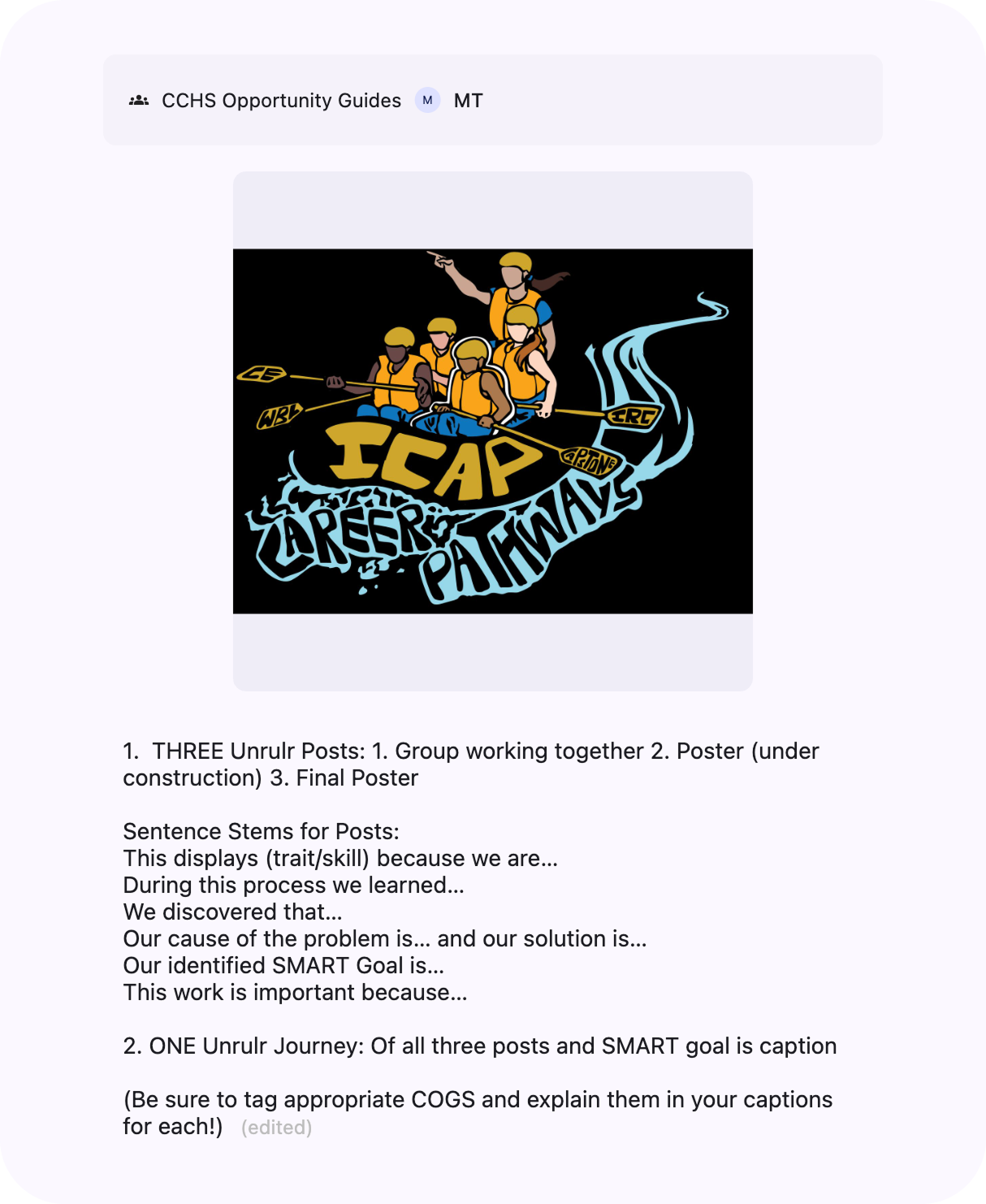
Teachers then began solving real problems, all while using collaboration, leadership, and civility. This group of teachers focused on improving Capstone and ICAP inconsistencies across advisory classes.
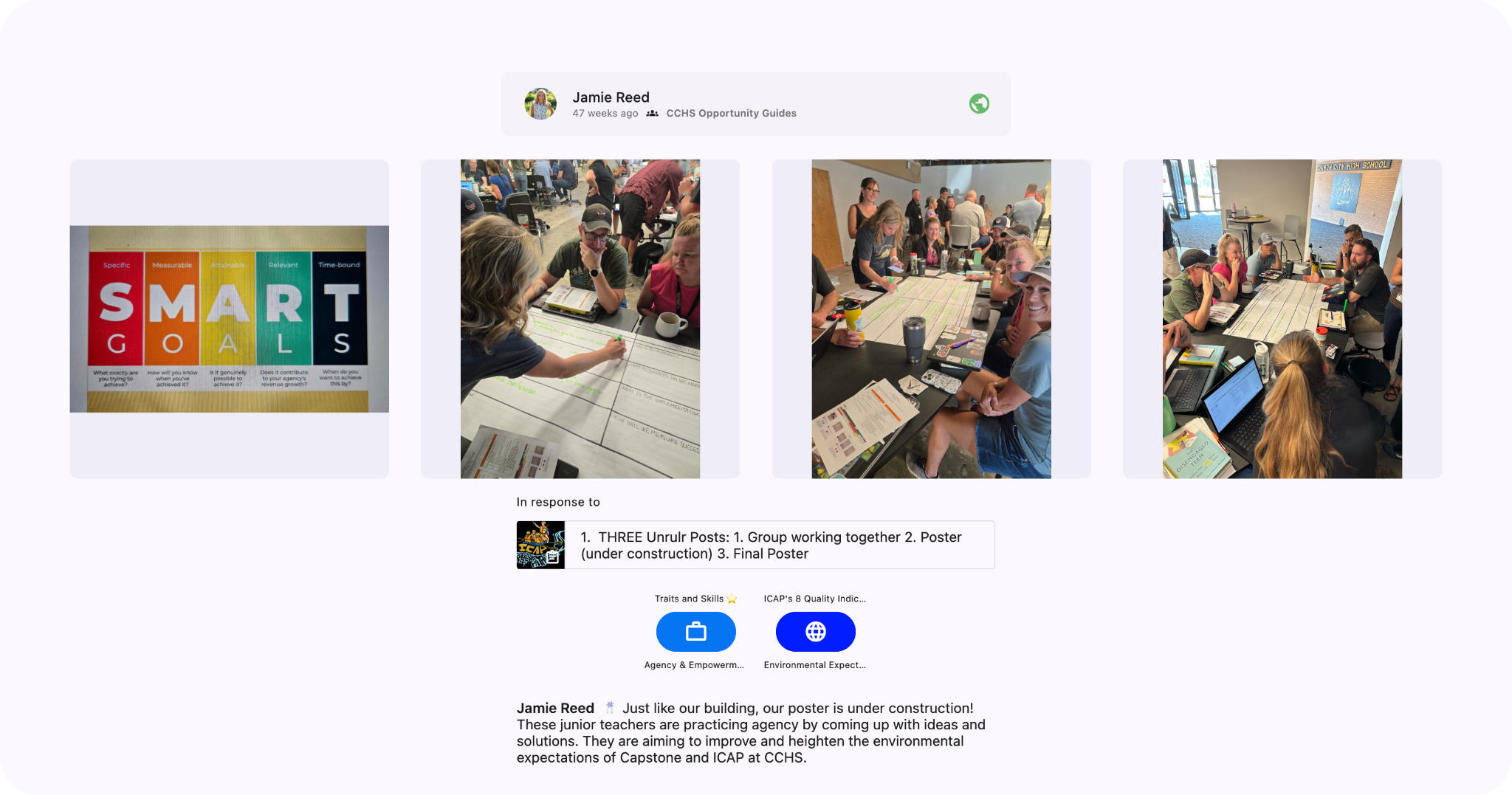
This group of teachers focused on increasing authentic PBL projects into all classrooms.
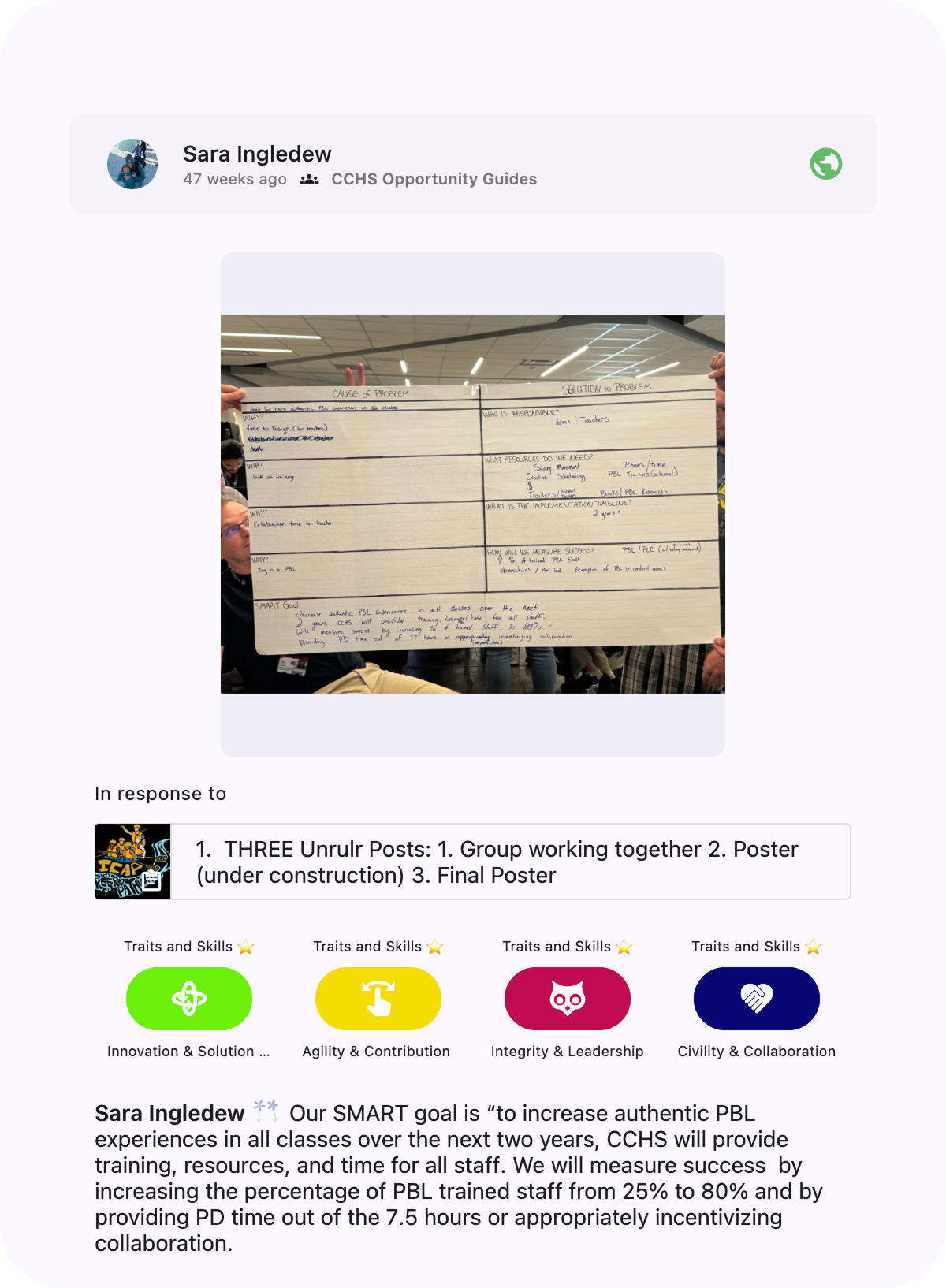
And this group set out to create a better way to communicate all the amazing career pathways opportunities that students have at CCHS.
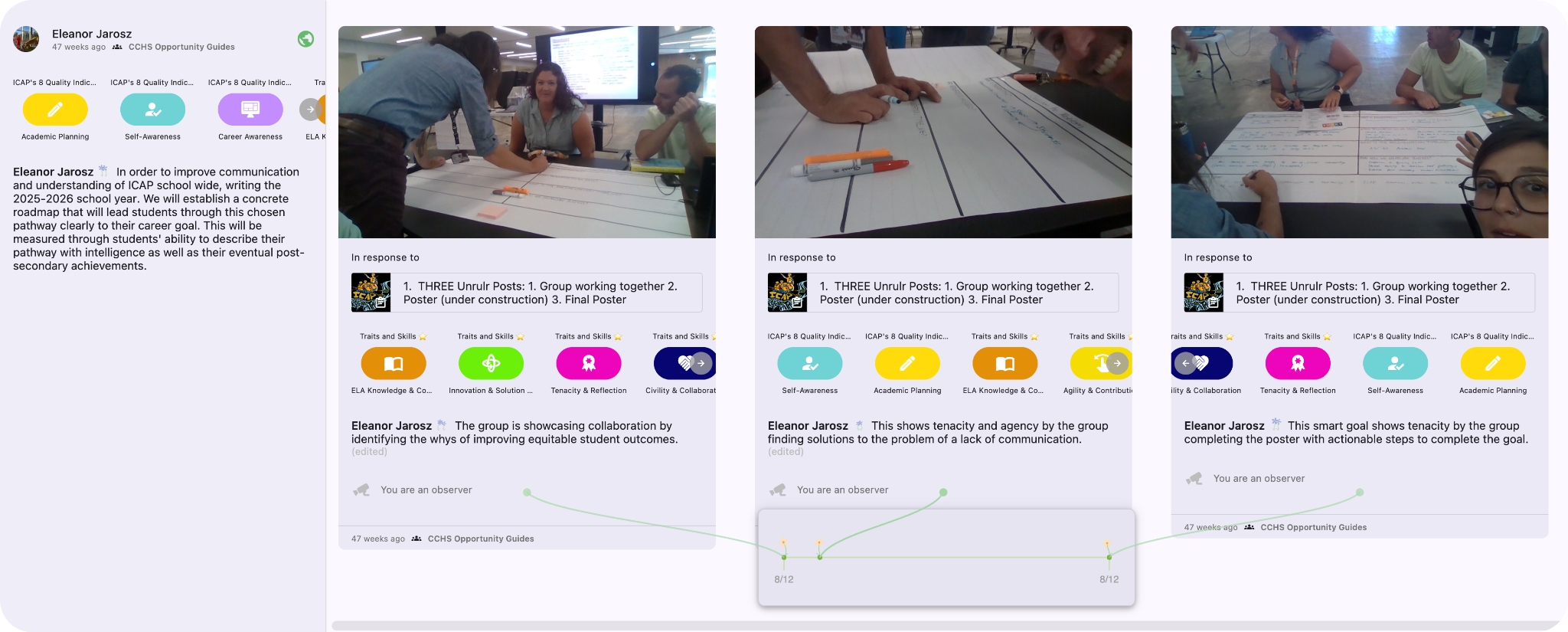
All teachers learned how to create a post, a journey, and how to respond to a prompt in Unrulr. This helped teachers to get into the tool and organically use it from a student perspective.
Because of this PD activity, teachers became more confident and capable in helping their students use the tool. Teachers were engaging in a highly hands-on and collaborative activity that also utilized student choice. Not only did the staff set out to solve various problems of practice, but in doing so, they learned how to use Unrulr and they gained ideas and strategies that they could bring back to their classrooms.
Rather than saying they didn’t have time to train teachers on Unrulr practices, CCHS leadership combined this training into traditional PD topics. Teachers weren't just sitting through a tutorial—they were simultaneously solving school-wide inequities, mastering a new documentation tool from the student perspective, and experiencing collaborative strategies they could immediately take back to their classrooms.
So this August, during those very precious, and very few hours of professional development, consider different ways you can combine all the content that needs to be covered. And really think about how you can utilize different teaching strategies and techniques to impart empathy driven professional development to set a positive tone for the school year: a tone of growth, reflection, and community.
Book a demo or create an Unrulr account today.
Subscribe to our newsletter for more great content!
